at the Horace Williams House
January 12-February 23, 2025
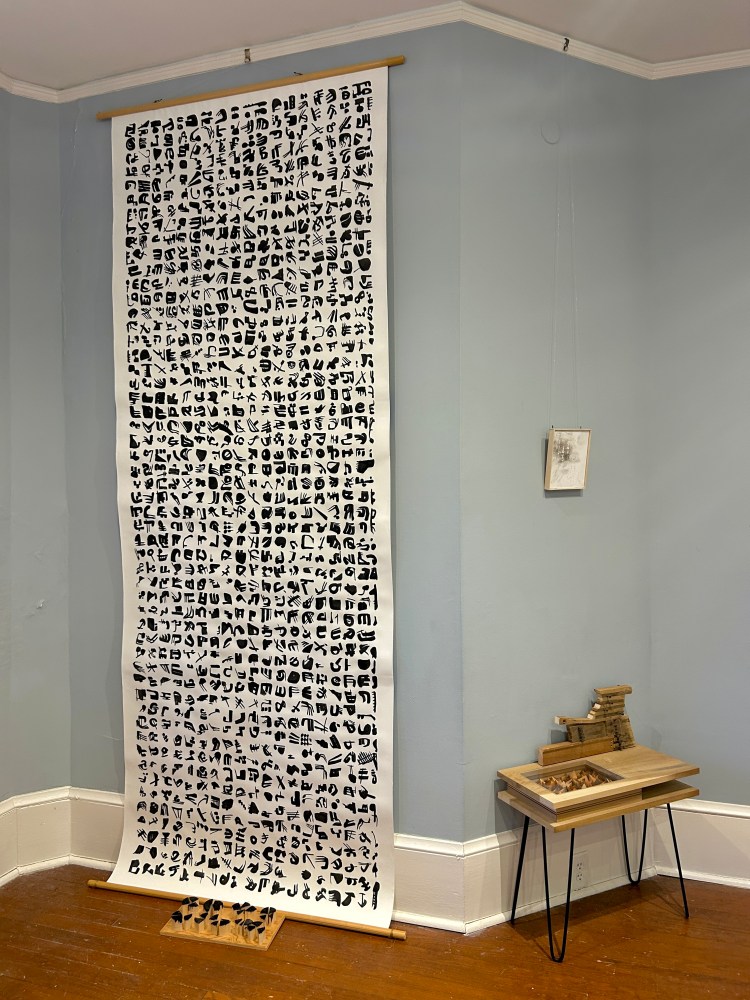
Winter Psalms is a meditation on the human experience of disorientation and doubt—moments when faith falters, and the sacred feels distant. The sculptures function as ritual objects while the drawings represent the pages of a deconstructed hymnal—a syncretic and speculative manual that draws from sacred texts.
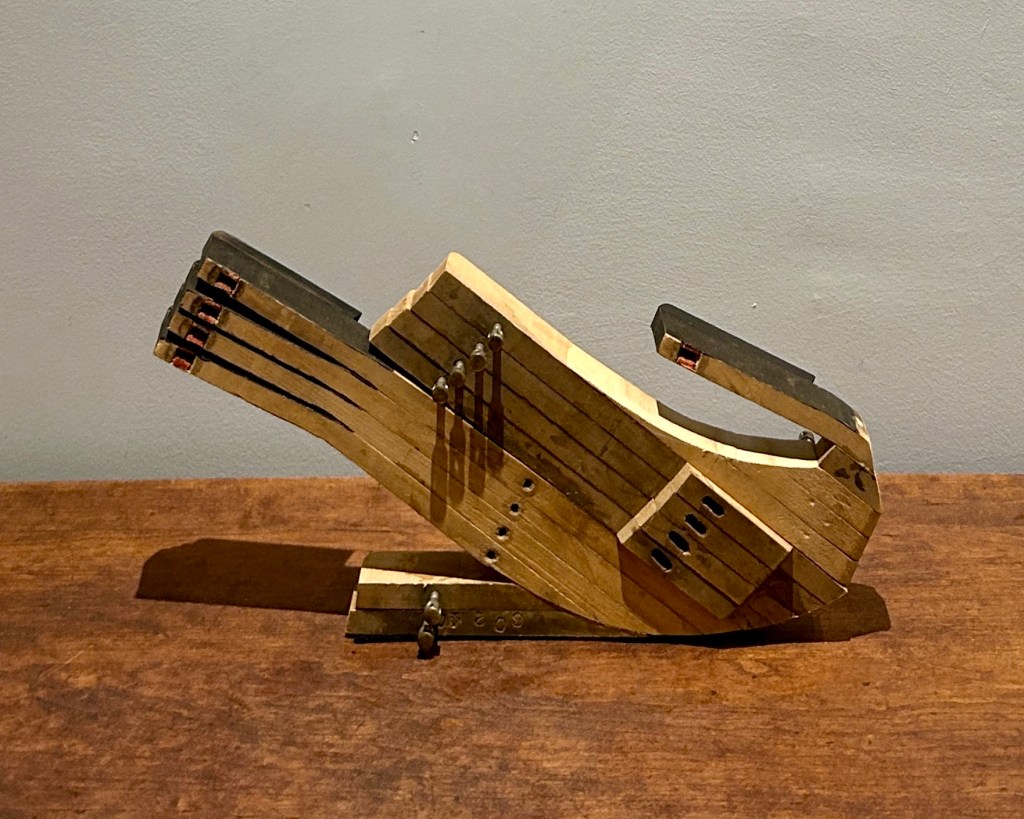
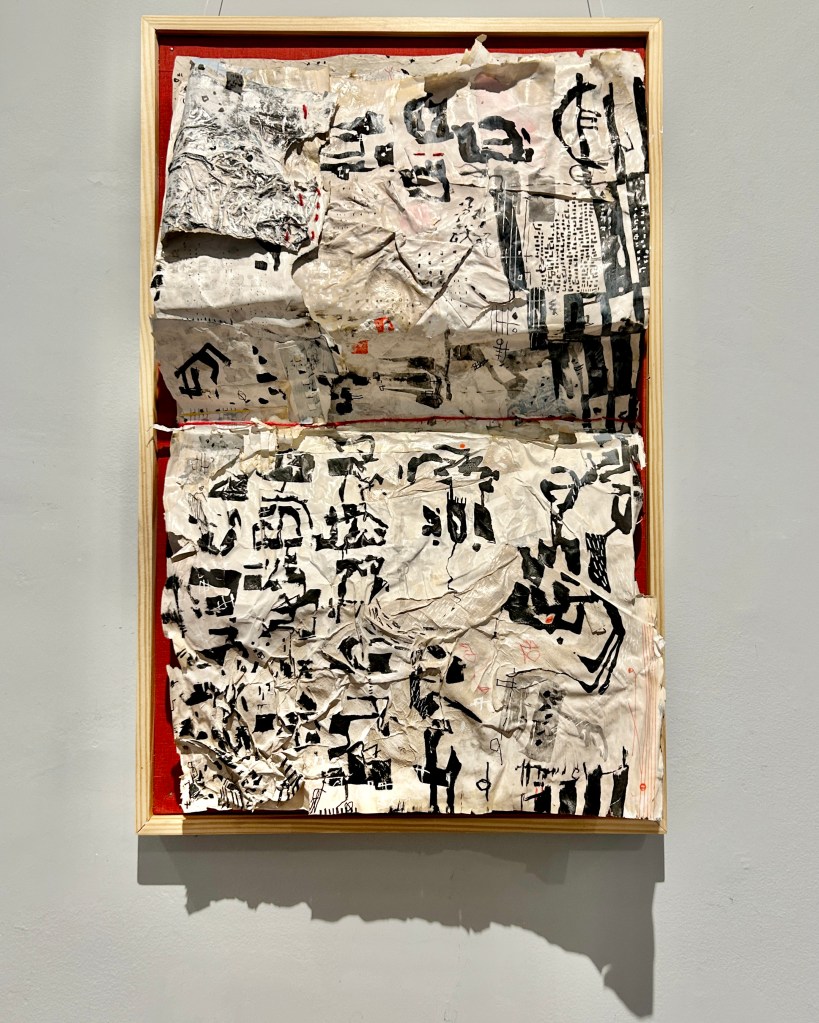
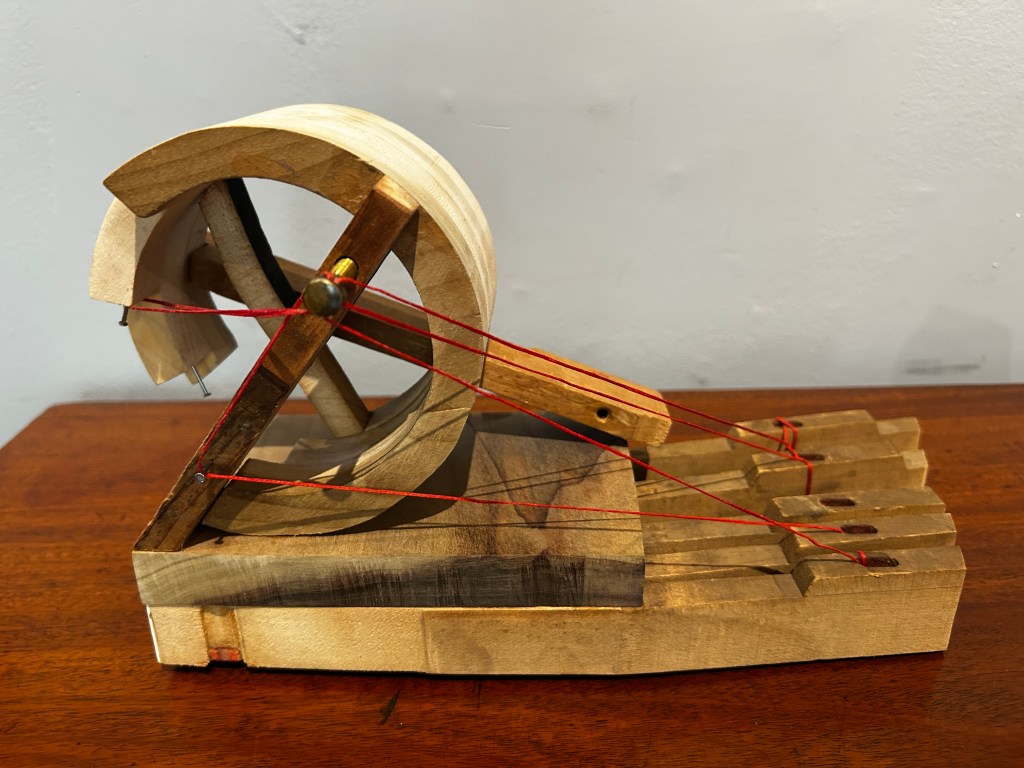
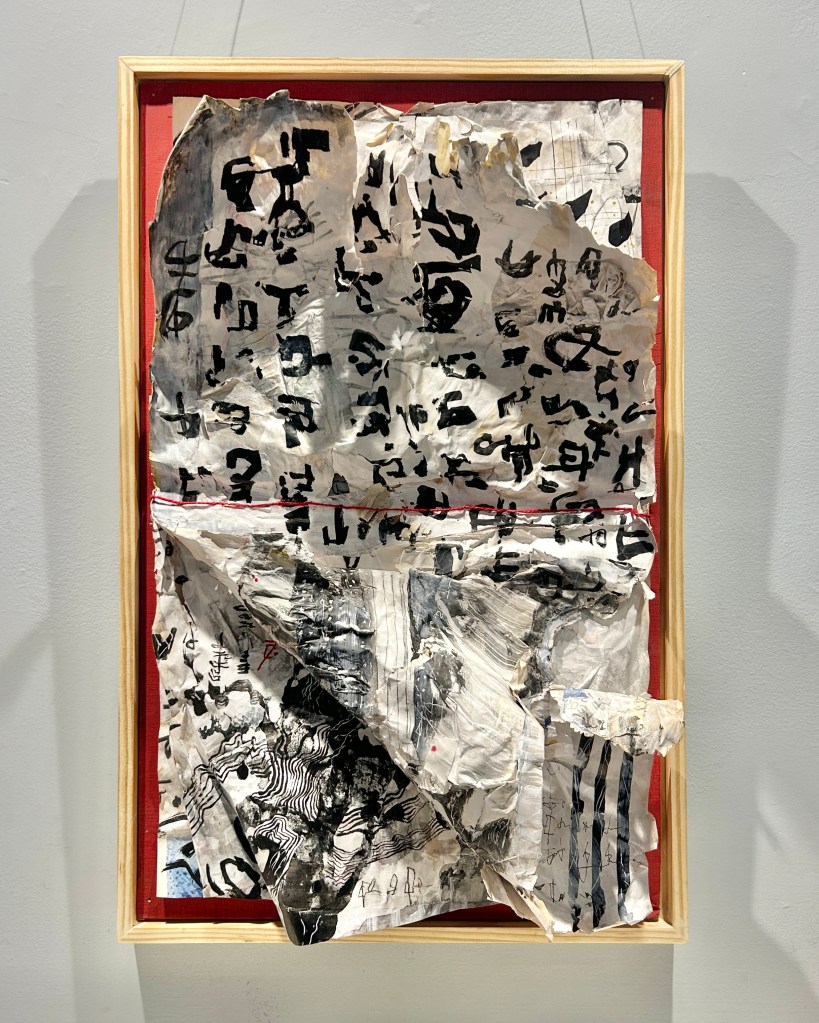
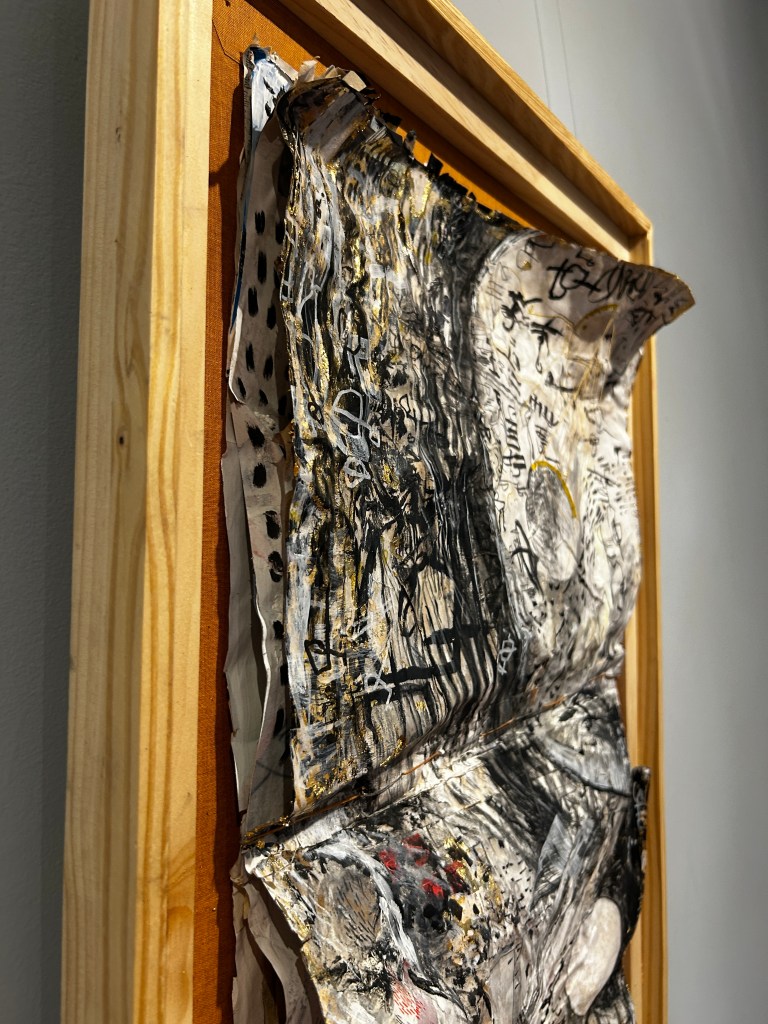
Theologian and exegetist Walter Brueggemann divides the Old Testament’s Book of Psalms into three sections: psalms of orientation, psalms of disorientation, and psalms of reorientation. The psalms of disorientation, also called winter psalms, are songs of despair, disappointment, and anger during times of suffering, often divided into psalms of lament and psalms of cursing.
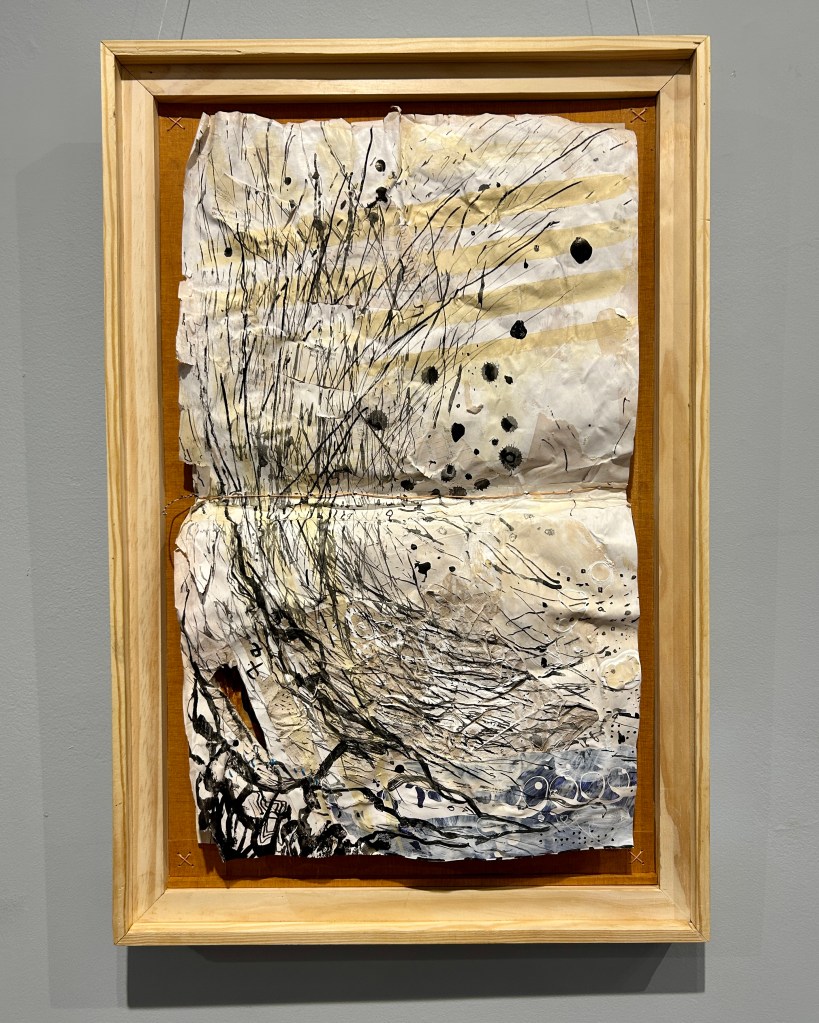
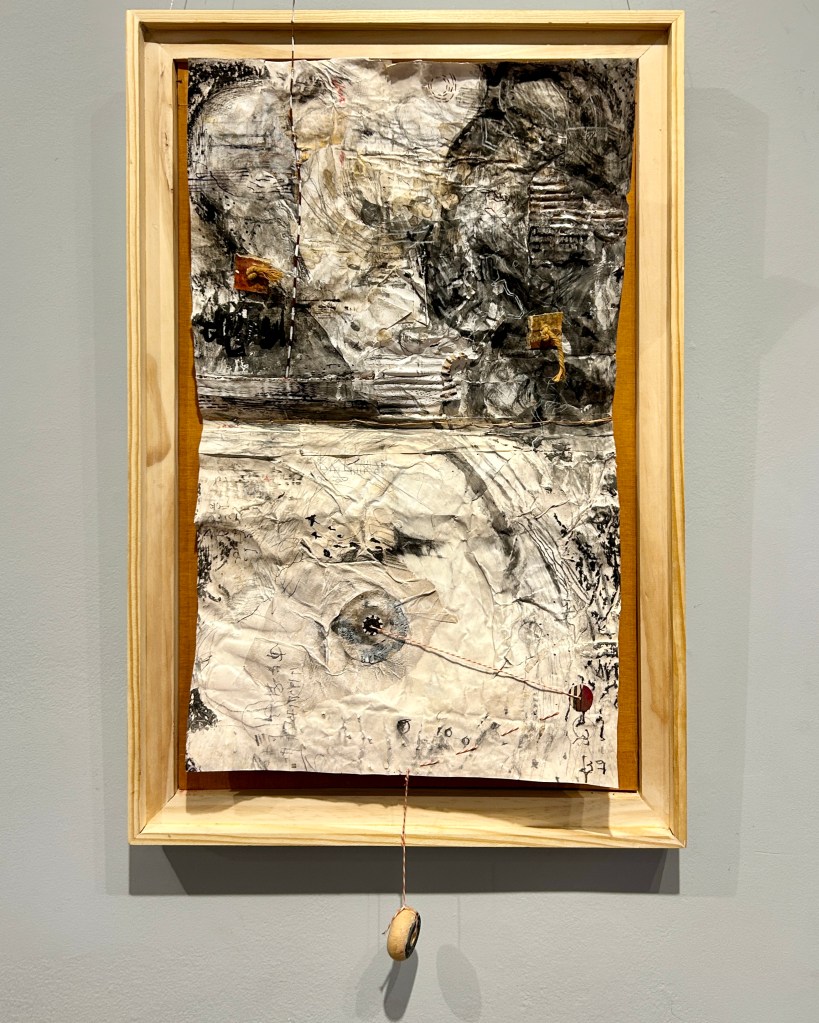
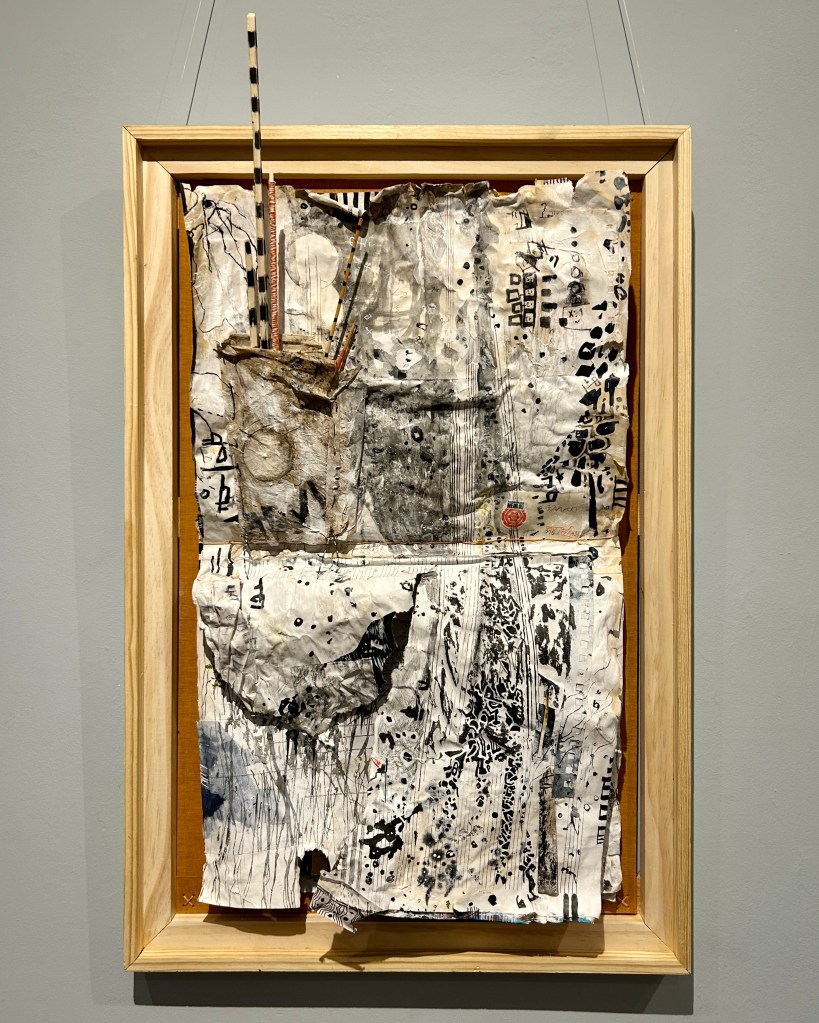
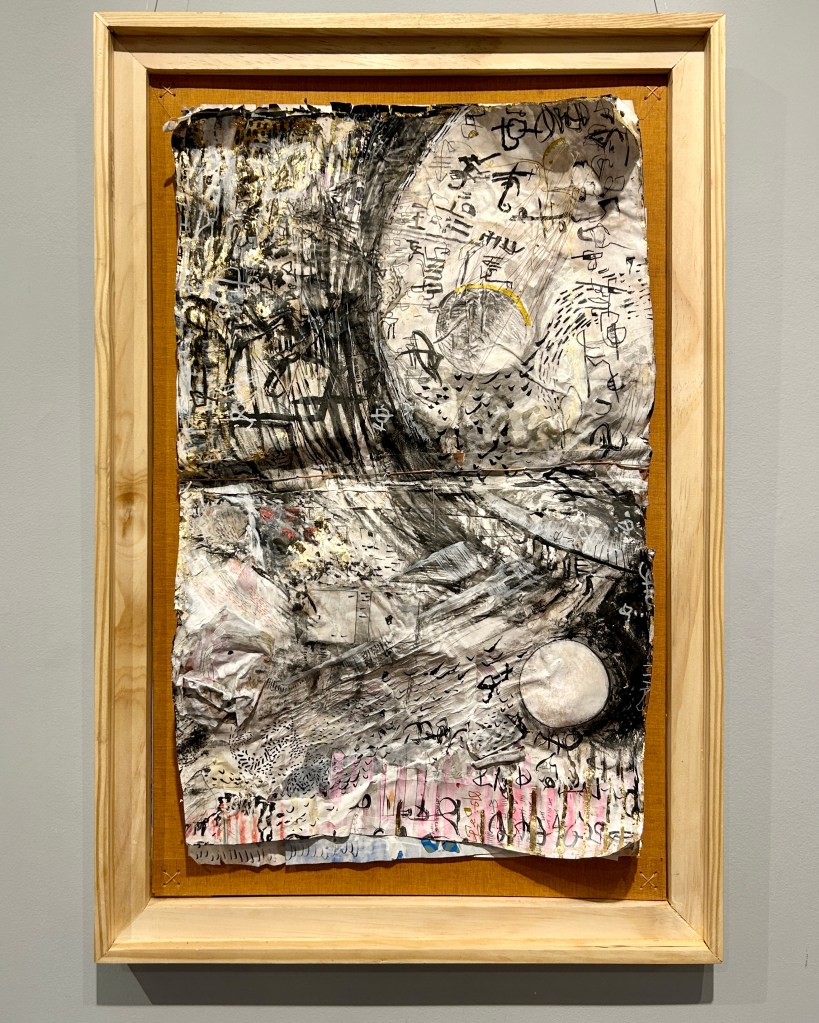
The book pages present as both discordant musical scores and layered maps of the ineffable—gestural notation that invites viewers to meditate and interpret. They are visual hymns, devoid of words yet echoing the universal human impulse to seek and express the divine. Inspired by passages from the Book of Psalms, the Tibetan Book of the Dead, and the Upanishads, the drawings reimagine sections of these sacred narratives as pages transformed through fragmentation and reconstruction. Their abstract markings are the fragmented language of turmoil, embracing the rhythms and textures of doubt–a poetry of turbulence. The sculptures highlight elements of these hymns while operating as punctuation for the exhibition space.
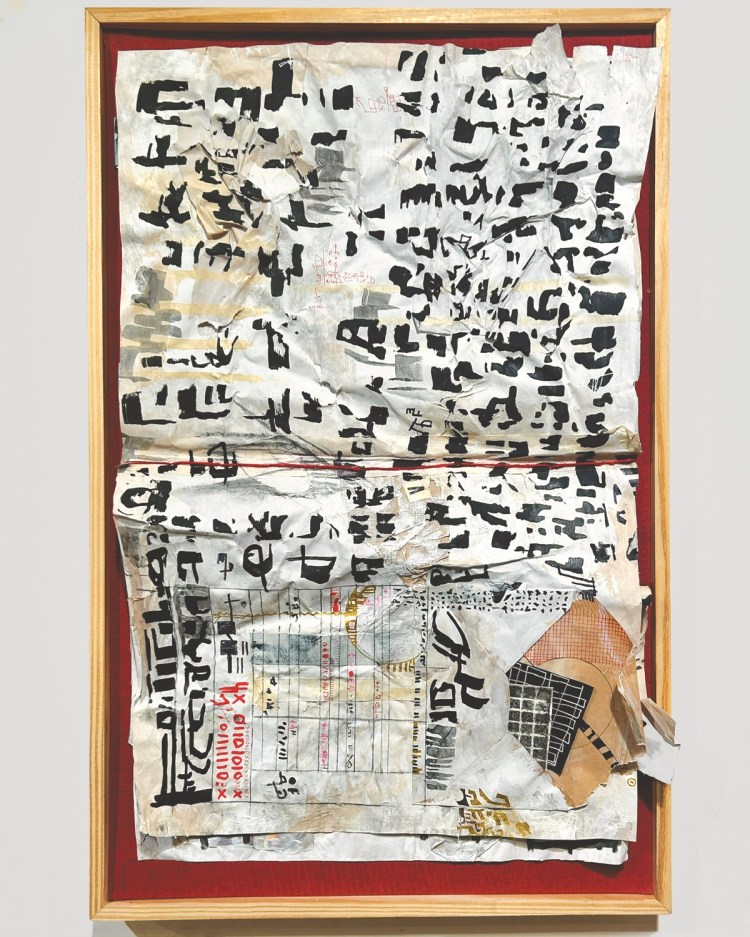
The between-state of disorientation reflects concepts from the Mandukya Upanishad and the Tibetan Book of the Dead. The dream self (taijasa) in the Upanishads exists in a liminal state, navigating symbols and deeper truths beyond waking consciousness. Similarly, the bardo in the Tibetan Book of the Dead is a transitional space between two states, rife with uncertainty and possibility. In this work, automatic drawing and asemic writing operate in states where conscious control dissolves, becoming tools for exploring the blurred boundaries between self, the collective, and the universal. These practices embody the liminality of the dream self and the bardo, opening spaces for introspection and offering glimpses into the transformative potential of the unknown
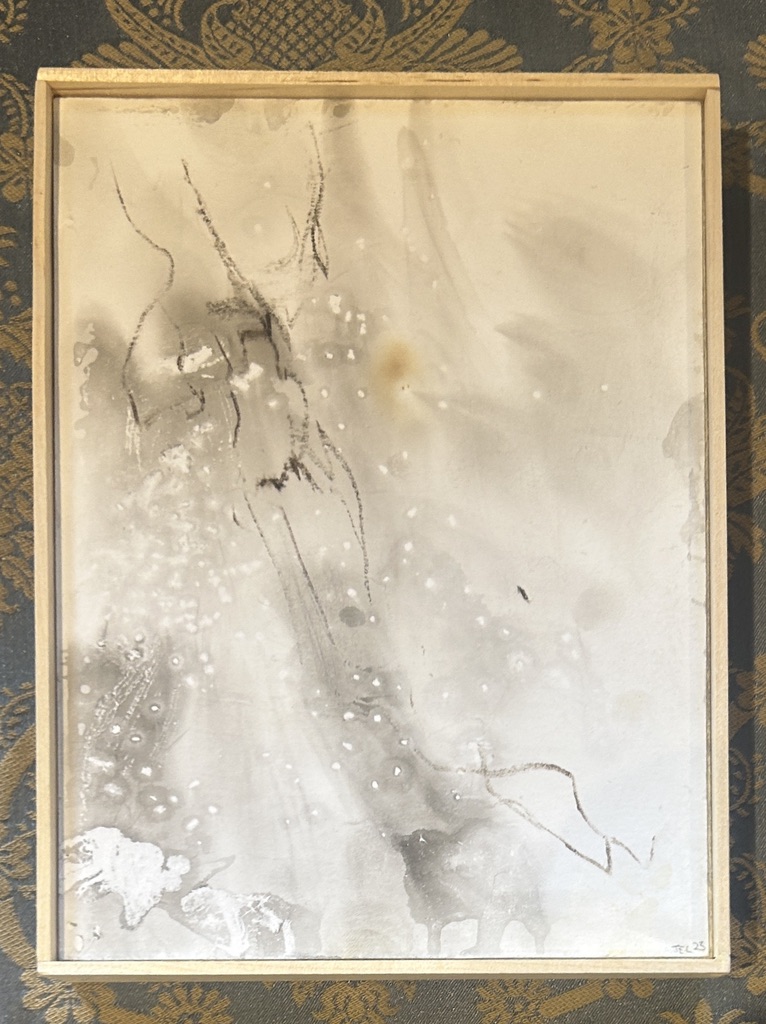
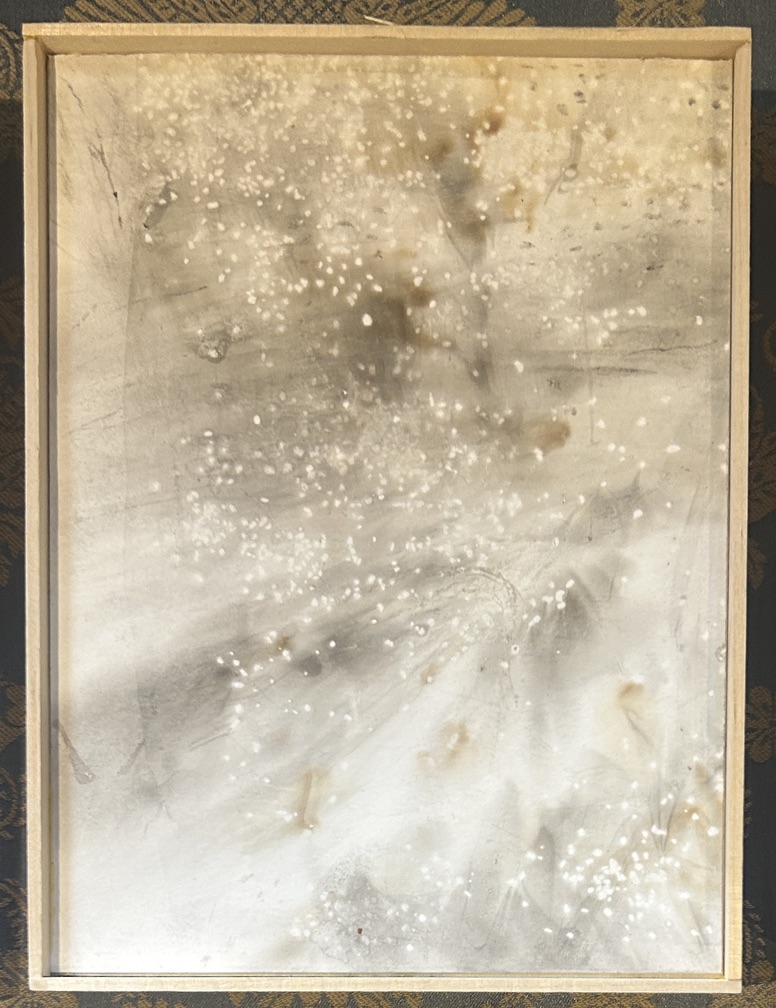
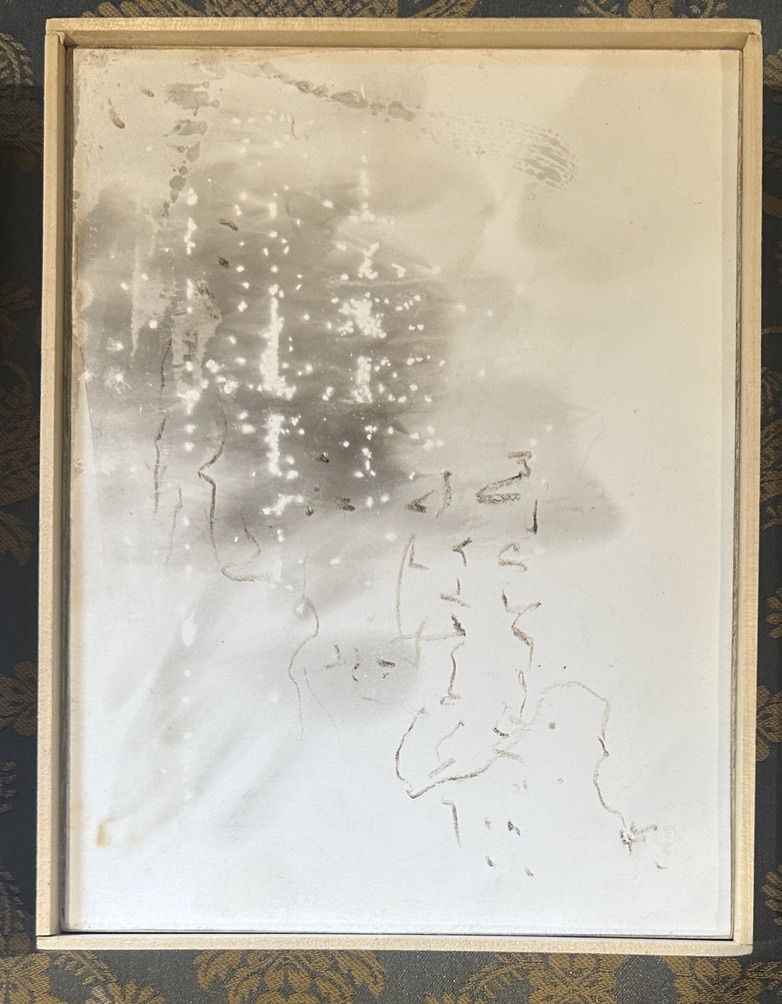
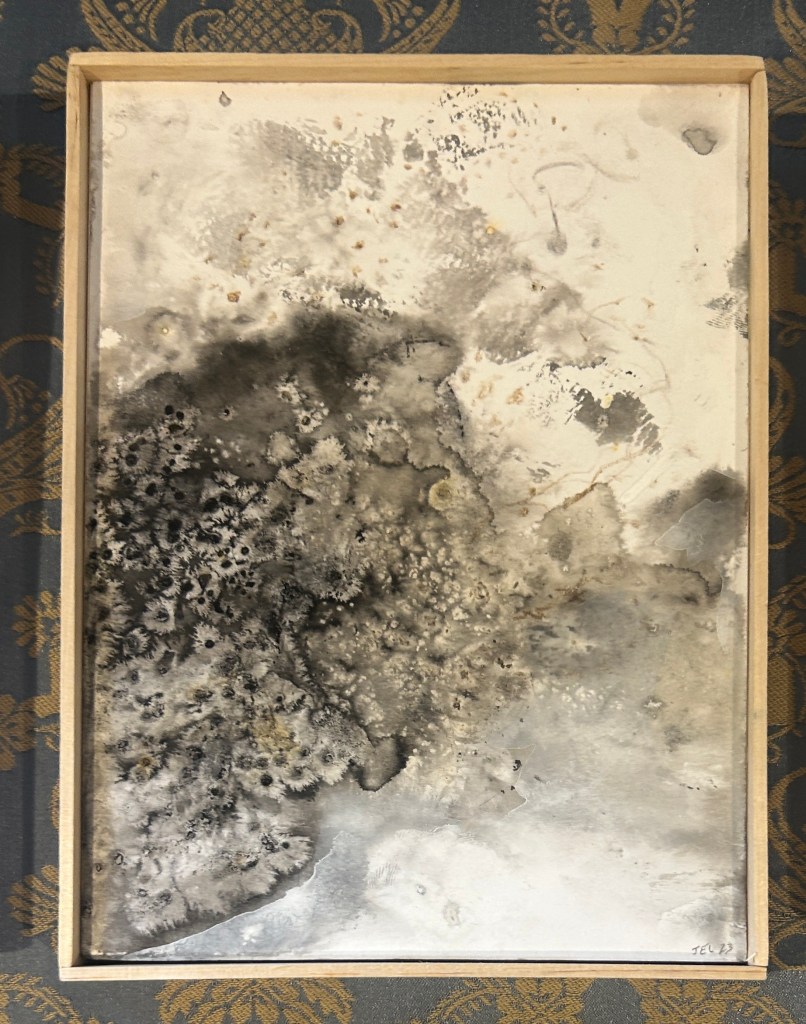
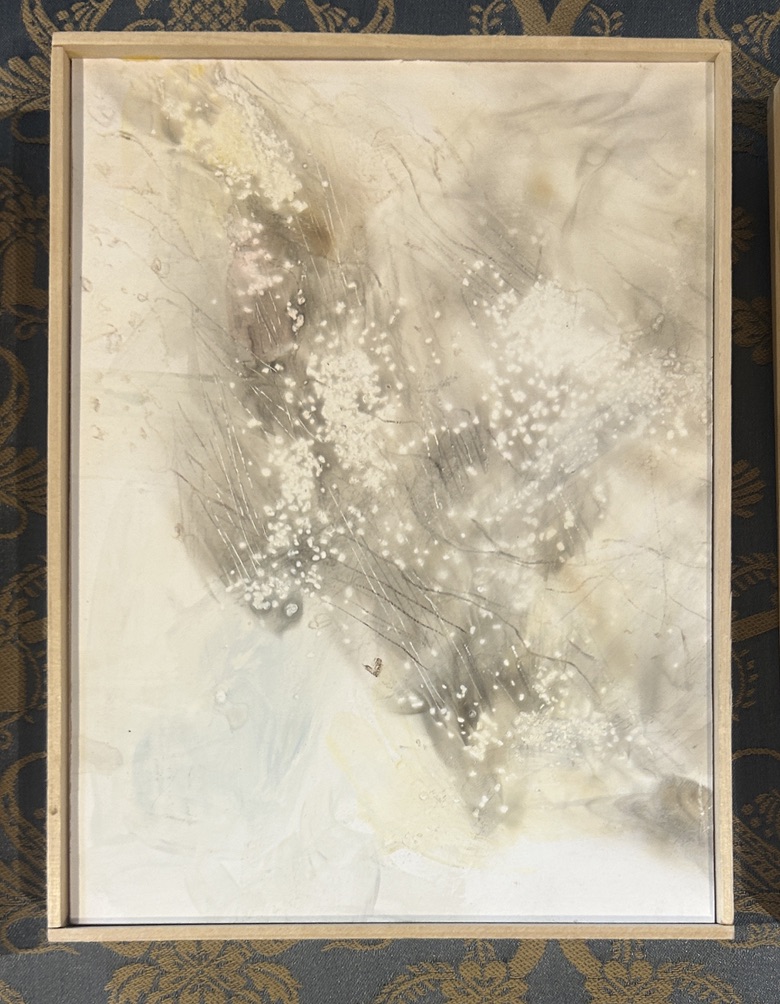
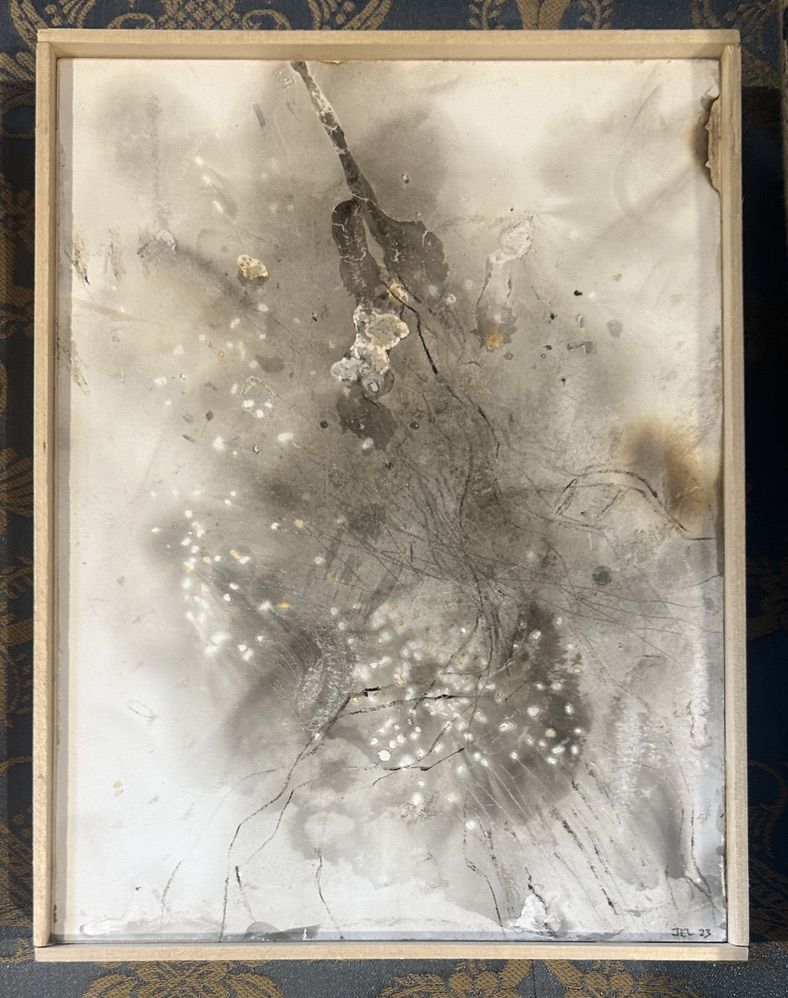
Ways of Knowing I-VI, 6″ x 8″ Smoke, salt, and soot drawings on birch panel
 Jason Lord Art